Word Drop
Magnetic ABWord
3.84.00 Reviews
- Version
- 2.14.0
- Installs
- 10.00K
- Age Rating
- Everyone
Screenshots
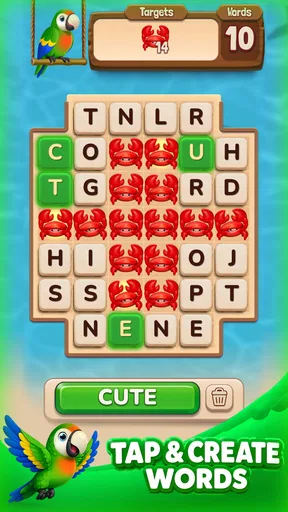
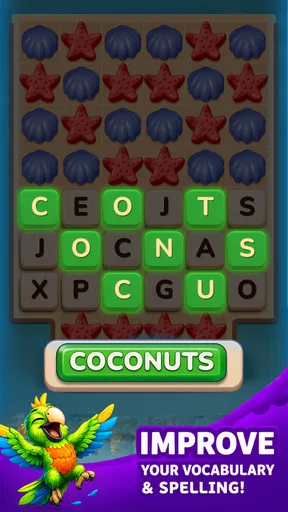
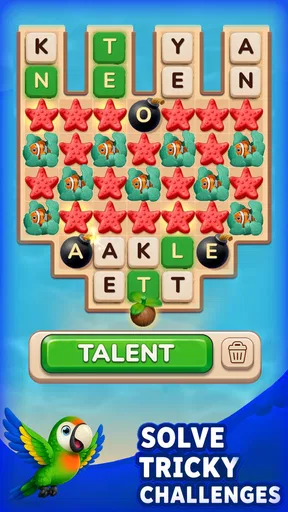
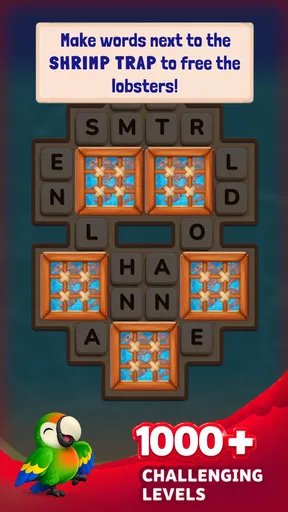
Our Review of Word Drop
 Analysis by Appyee
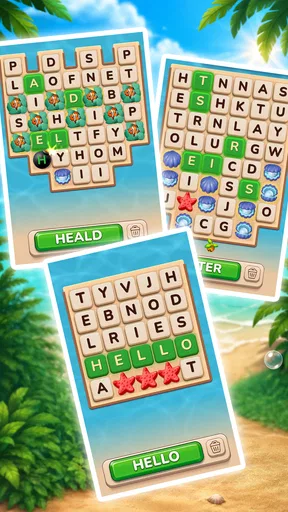
I spent time with Word Drop as a quiet, low-pressure word game, and its appeal is easy to understand: it turns short bursts of vocabulary play into something that fits naturally around a normal day. The beach setting gives the experience a softer mood than a traditional crossword or a timed spelling challenge, while the central task stays familiar enough to pick up without a tutorial-heavy introduction. You look for words, complete levels, and gradually test how quickly and accurately you can spot useful combinations.
That simplicity is both its strongest quality and its main limitation. I found it pleasant when I wanted a few minutes of concentration without committing to a long session, but it is not the right choice for someone looking for a deep narrative, competitive multiplayer, or a highly complex word-building system. Magnetic AB has clearly aimed for accessibility here. The game is free to start, rated for Everyone, and listed for devices running Android 7.1 or later, which makes it approachable for a broad range of players.
How the goals and pacing shape the experience
I find the appeal of Word Drop easiest to judge by how it fits into shared downtime: it offers a simple word puzzle that one person can play briefly, then hand the device over without requiring a long session or a complicated explanation. That makes it a plausible household pick, though the way its goals and pacing work is what determines whether different players will want to take turns.
The first goals are clear without feeling demanding
The early appeal comes from the immediate objective. Each level asks me to search for words through a compact puzzle format, so I always know what I am trying to accomplish. There is no need to learn a large collection of rules before the game becomes enjoyable. That makes the opening particularly suitable for someone who likes word games but does not want the mental overhead of a full crossword, a dense anagram board, or a long daily challenge.
I also like that the beach presentation changes the emotional tone of the task. A mistake in a calm, colorful setting feels less punishing than a countdown clock or a competitive leaderboard. The result is a game I can open while waiting for an appointment, taking a short break from work, or winding down before sleep. The goal is still to find words, but the presentation encourages patience rather than frantic tapping.
For new players, the most useful approach is to treat the opening levels as a vocabulary warm-up rather than trying to solve everything instantly. I found it better to scan for short, obvious words first and then use the remaining letters or spaces to guide the harder discoveries. That habit reduces random tapping and makes the puzzle feel more deliberate. It is a small adjustment, but it helps the game reveal its intended rhythm early.
Progress is felt through completion more than spectacle
Word games need to make progress visible, even when the underlying action is simple. Here, the clearest signal is finishing one puzzle and moving on to the next. That sounds basic, but it works because every completed level provides a clean stopping point. I can play one round and leave without feeling that I have abandoned a complicated session.
The progression also benefits from the compact nature of the puzzles. Completing a level gives me a sense of closure, while starting another creates a modest reason to continue. This is a better fit for casual play than systems that require a long uninterrupted run. If I have only a few minutes, I can still achieve something tangible instead of spending the whole session preparing for a later reward.
At the same time, players who need elaborate unlock trees, character upgrades, or a strong narrative arc may find the progress signals too modest. The game’s satisfaction comes from solving word layouts, not from building an avatar or opening a large collection of story chapters. That distinction matters. The experience is about repeated puzzle completion, so its motivation depends heavily on whether the act of finding words remains enjoyable for you.
The difficulty curve rewards observation, not speed alone
The most effective way to approach a word puzzle like this is to separate recognition from guessing. I first look for familiar short words, repeated letter patterns, and common endings. After that, I inspect the leftover letters instead of restarting my search from the beginning. This workflow is more reliable than tapping every possible combination, especially when a level includes words that are easy to overlook because they sit outside the first obvious pattern.
That makes the challenge feel more thoughtful than a simple reaction test. Speed can help, but careful scanning is usually more valuable. I appreciate that balance because it gives the player room to improve through technique. A person who struggles at first can become more efficient by changing how they search, rather than merely trying to tap faster.
The difficulty is also easier to tolerate because the game is not framed as an aggressive contest. When a puzzle slows me down, I can pause and return to it with a fresh view. That is important for casual players and younger users, who may enjoy the vocabulary element without wanting the pressure found in timed word apps. The Everyone age rating reinforces that broad, approachable positioning.
Still, the relaxed structure may not satisfy expert word-game fans who want a sharply escalating test of vocabulary knowledge. If your favorite alternative is a demanding crossword, a competitive spelling game, or a daily puzzle with strict performance comparisons, this will probably feel lighter. Its challenge is designed to support a calming session, not to prove who can solve the hardest board fastest.
Unlocks and momentum are intentionally restrained
One thing I noticed is that the game’s momentum comes from the next puzzle rather than from a complicated reward economy. That can be refreshing. I am not constantly asked to manage several currencies, upgrade a collection, or follow a long chain of unrelated objectives. The word-solving itself remains the central activity.
However, restrained progression can also create a retention ceiling. Once the novelty of the beach atmosphere settles, the game has to rely on the quality and variety of its levels to keep me returning. Players who enjoy uncomplicated repetition may see that as a strength. Others may want more dramatic milestones, more visible personal records, or a stronger reason to come back on a particular day.
My advice is to decide what kind of motivation works for you. If completing a handful of relaxed word puzzles is enough, the pacing feels natural. If you need a constant stream of new mechanics, social competition, or substantial unlocks, the experience may begin to feel too quiet. That is not necessarily a flaw; it is a clear trade-off in the design.
Where free access meets optional spending
The game is free, which makes it easy to try without making an immediate commitment. It also includes in-app purchases ranging from $1.89 to $99.99 per item. Because of that range, I would recommend checking the purchase flow carefully before handing the device to a child or letting someone play on a shared account. The Everyone rating makes the game broadly suitable in content terms, but age suitability and spending control are separate concerns.
For my own use, the sensible approach is to treat purchases as optional rather than as part of the basic reason to install the game. The free entry point is enough to decide whether the word puzzles and pacing suit you. If you dislike the core loop, spending more will not change that fundamental experience. If you enjoy it, you can make a deliberate decision later instead of buying impulsively during a difficult moment.
This is also where Word Drop differs from a completely self-contained paper puzzle book. A book has a fixed cost and no purchase prompts after that, while a free mobile game can be more convenient but may place optional spending inside the play environment. For families, I would use device-level purchase protections and explain that completing a difficult level is not a reason to buy something immediately.
A realistic everyday session
Imagine having ten minutes before a train arrives. A large strategy game would take too long to load into a meaningful activity, and a crossword might be awkward if you do not have a pen or a stable surface. This is where Word Drop makes sense. I can open it, work through a word puzzle, and stop at a natural break when the train arrives. The session does not demand a long story sequence or a team of other players.
Another useful situation is a short mental reset after a stretch of screen-heavy work. Instead of switching to an endless social feed, I can give my attention one bounded task: inspect the letters, find words, and finish the level. That does not make the game a formal learning tool, and I would not treat it as a substitute for structured vocabulary study. Its value is more practical and modest: it gives the mind a small, focused activity with a soothing presentation.
For travel, it is especially appealing when I want something less intense than an action game. For family use, the simple word-search premise is easier to explain than a complicated ruleset. For older phones, the minimum operating-system requirement is relatively accommodating, although actual comfort will still depend on the device and how smoothly it runs the current release.
How it compares with familiar word-game alternatives
Compared with a crossword, Word Drop feels more guided and less dependent on interpreting clues. That makes it faster to learn and better for players who enjoy recognizing letter combinations rather than solving definitions. The trade-off is that crossword fans may miss the richer sense of language, trivia, and clue construction.
Compared with an anagram game, it offers a gentler presentation and a less confrontational mood. Anagram apps often focus on finding every possible word from a fixed group of letters, sometimes with a strong emphasis on speed or score. Word Drop is a better match for someone who wants the word-finding activity wrapped in a relaxing beach environment. It is a weaker match for someone who wants to compare performance or chase increasingly technical vocabulary.
Compared with a daily word challenge, its advantage is flexibility. I do not have to organize my routine around one puzzle or worry about missing a particular day. The disadvantage is that it may not create the same ritual or anticipation. A daily game can become part of a morning habit because its limited format gives the player a clear appointment. Word Drop is more available whenever I feel like playing, but that freedom can make it easier to forget.
Compared with educational vocabulary software, it is more casual and immediately entertaining. I would use it to exercise attention and word recognition, not to follow a planned curriculum. Someone studying a language, preparing for an exam, or needing definitions and pronunciation should choose a dedicated learning app instead. The game’s strength is low-friction practice, not structured instruction.
What the current release suggests for potential players
The current version is 2.14.0, and the game has attracted over ten thousand installs with an average rating of 3.8 from around forty ratings. Those figures suggest a small but established audience rather than a massive word-game community. I would read that as a reason to set expectations realistically: this is an accessible casual title, not a dominant competitive platform with a huge social ecosystem.
The rating also fits my overall impression of the design. The concept is easy to appreciate, the atmosphere is pleasant, and the short-session format is useful. At the same time, the restrained progression and optional purchase structure will not appeal equally to everyone. A middle-of-the-road average is understandable for a game whose success depends so much on personal tolerance for repetition and preference for relaxed pacing.
Magnetic AB’s choice to keep the focus on beach-themed word puzzles gives the game a recognizable identity, but it also narrows its audience. That identity works when I want calm concentration. It works less well when I am searching for variety, competition, or a strong sense of long-term mastery.
Who should install it, and who should skip it
I would recommend trying it if you enjoy word searches, want a game that fits into short breaks, or prefer a peaceful visual mood over a stressful timer. It is also a sensible option for households looking for an Everyone-rated word game that is easy to explain. The free price makes testing the core experience straightforward, provided in-app spending is managed responsibly.
I would skip it if your priority is a large vocabulary curriculum, advanced clue solving, multiplayer competition, or a deep progression system. I would also be cautious if you dislike optional purchases appearing in free games, even when you have no intention of using them. In that case, a paid puzzle book or a completely purchase-free alternative may feel more comfortable.
Players who become frustrated by a difficult level should resist the urge to treat every board as a speed test. Pause, scan from the shortest likely words upward, and revisit the unused letters after each discovery. That method is one of the best ways to make the game feel less random. It also reveals whether you enjoy the underlying search process, which is the real test of whether this title belongs on your device.
My progression verdict
Word Drop sustains play through clear early goals, visible level completion, and a steady invitation to solve one more compact puzzle. Its pacing is strongest when I use it as a small daily diversion rather than a primary game. The beach setting supports that role, and the uncomplicated word-search structure means I can return after a break without relearning anything.
Its retention pressure is deliberately mild. There is no need to invent a larger promise than the game delivers: the pleasure comes from spotting words, finishing levels, and enjoying a calmer presentation. That simplicity is valuable, but it means long-term engagement depends on my personal appetite for repeated puzzles. The optional purchase range is worth keeping in mind, especially on shared devices, yet the free starting point gives most people a fair way to judge the experience first.
My final view is positive but specific. I would recommend Word Drop to a friend who wants a relaxing word game for short breaks, especially someone who finds traditional crossword clues too demanding or timed word games too intense. I would not present it as a complete replacement for serious vocabulary practice or competitive puzzle apps. Its best quality is the balance between a clear mental task and an unhurried atmosphere; if that is exactly what you are looking for, it is worth trying.
Verdict
Strengths of Word Drop
- Simple word puzzles are easy to learn and play in short sessions.
- Helpful hints can make difficult levels more approachable.
- Clean interface keeps the focus on solving each puzzle.
- Suitable for relaxing offline play during commutes or downtime.
- Progressive challenges provide a sense of ongoing achievement.
Limitations of Word Drop
- Some levels may feel repetitive after extended play.
- Hints or extra features may be limited without in-app purchases.
- Ads can interrupt the flow between puzzles.
- Difficulty may vary noticeably from one level to the next.
- Players seeking competitive multiplayer may find the experience limited.
Similar Picks in This Category
View All
Word Search - Word Puzzle Game
Bluetile4.8

Word Search Quest - Puzzles
Blackout Lab4.8

CodyCross: Crossword Puzzles
Fanatee, Inc.4.7

Words of Wonders: Crossword
Fugo Games4.9

Wordscapes: Word puzzle game
PeopleFun4.7

Word Search Explorer
PlaySimple Games4.9
Frequently Asked Questions
What is Word Drop and how does the game work?
Word Drop is a word puzzle game in which you form words from letters presented on the screen. The main objective is usually to clear tiles, reach a target score, or complete a level before the available moves or time run out. As you progress, puzzles become more demanding, introducing unusual letter combinations, obstacles, or special tiles that require more thoughtful planning.
Is Word Drop suitable for beginners and casual players?
Yes, Word Drop is generally accessible to beginners because its basic gameplay is easy to understand: look at the available letters and create valid words. Early levels work well as a tutorial, allowing new players to learn the controls and scoring system gradually. However, later challenges can be considerably more strategic, so experienced word-game fans may also find enough difficulty to stay interested.
Can I play Word Drop without an internet connection?
Some parts of Word Drop may be available offline, particularly previously loaded levels or the main single-player mode, but this can depend on the version installed and how the developer has implemented advertisements, events, and account features. An internet connection may still be required for updates, online competitions, cloud synchronization, rewards, or restoring purchases. Check the store listing before downloading if offline play is essential.
Does Word Drop contain advertisements or in-app purchases?
Word Drop may include advertising and optional in-app purchases, as is common with free-to-download mobile puzzle games. Advertisements can appear between levels or when you choose to receive extra hints, lives, or other bonuses. Purchases may remove ads or provide additional resources, but they are not always necessary to enjoy the core game. Review the payment details carefully, especially before enabling purchases on a shared device.
What should I know about privacy and device permissions before installing Word Drop?
Before installing Word Drop, review its current Google Play or App Store privacy information because data practices and permissions can change with updates. The game may collect technical information, usage statistics, advertising identifiers, or purchase-related data. Avoid granting permissions that seem unrelated to gameplay, and check whether the app offers account deletion or data-management options if privacy is an important consideration for you.
Play our best games!


